The evolution of modern vertical stacked hives reflects a continuous effort to mirror the geometry, moisture dynamics, and thermal insulation of a wild hollow tree nest. This article explores the historical trajectory from early vertical designs to Roger Delon’s Climatstable system, its transmission into Eastern Europe, and a critical analysis of its physical and dimensional parameters.
Evolution of the Vertical Stacked Hive
Émile Warré - People's Hive (Warré Hive)
Internal hive size 300x300mm
Box height 210mm
Open-top breathable quilt
Top bars - no frames
Roger Delon
Closed-top thermal trap
300x300x215mm
Special construction of hive bottom to allow easy adjustable (by shifting boxes against the bottom shift) vertical intake and escape air flows
Special 'Semi-Cadre'. Semi - wooden, semi - steel wire frame
Y. Bacic & Soviet Booklet
Preserved 215mm box depth; adopted "Alpine" name
Modern "Alpine" Adaptation
Translation misinterpritation of 'Semi-Cadre' as a half height frame size. First public reference, probably 'Pchelovodstvo' Journal, 1992 No.1
Shifted to 108mm half-height super
The shift turns out to be a win - win. Boxes can be easily manipulated with one hand. Even with the low nectar flow frames are fully caped and ready for extraction much faster than in any other system
The Trailblazers: Warré to Delon
Abbey Émile Warré: The People's Hive (La Ruche Populaire)
- Core Concept: Replicating the slim, vertical chimney of a hollow tree trunk using modular 300 × 300 mm internal dimensions.
- Ventilation Strategy: An open, breathable top quilt (sawdust/straw) designed to absorb condensation and release excess heat out through the roof.
Roger Delon: The Stable-Climate Hive (La Ruche Climatstable)
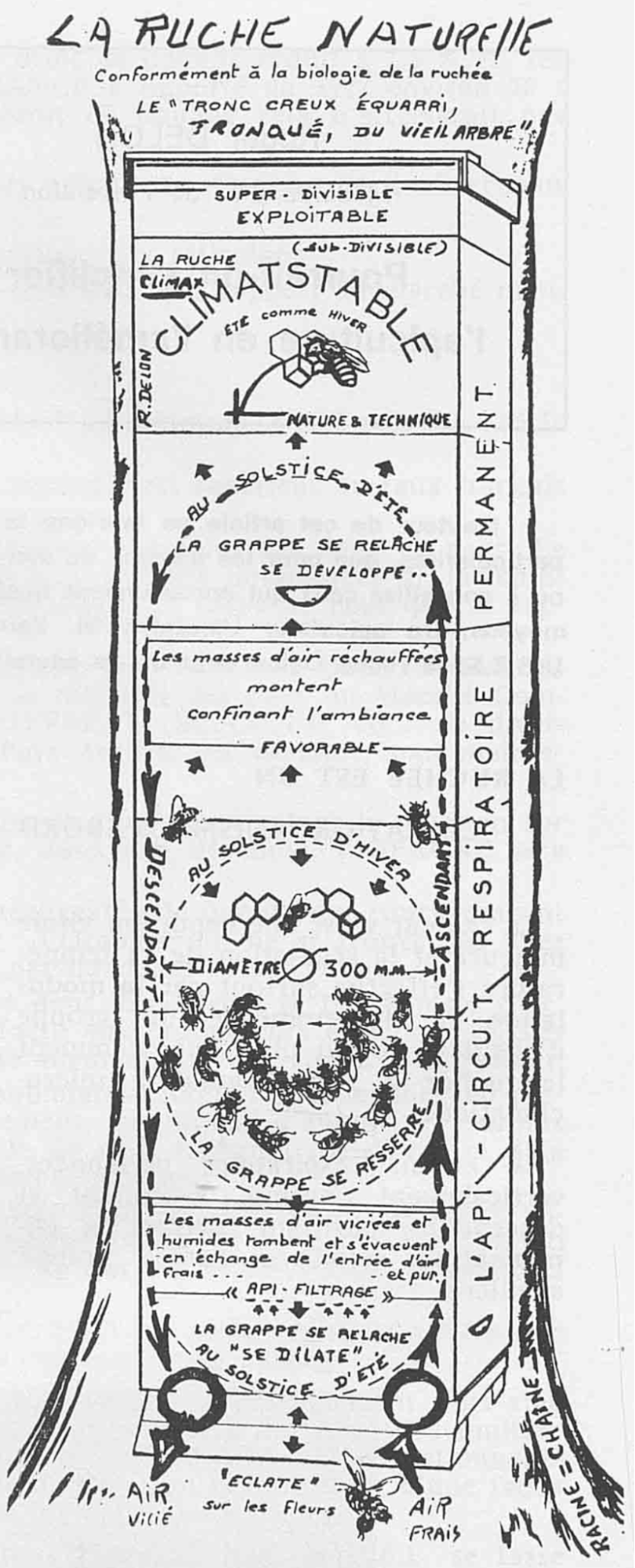
Roger Delon developed his theories from the 1940s onward (under his broader work titled L'Apiculture Productive Économique et Simplifiée), formally presenting his Climatstable hive at the XXIII Apimondia Congress in Moscow (1971) and in La Gazette Apicole (April 1979):
- Closed Thermal Envelope: Delon eliminated top ventilation. By sealing the top with a combination feeder-ceiling unit acting as an air cushion, he turned the hive into a closed thermal trap.
- Pure Physical Aerodynamics: Warm, oxygenated air enters from a single bottom entrance and rises. As bees breathe, the air accumulates carbon dioxide and metabolic moisture, grows heavy, drops down, and exhausts naturally through the bottom.
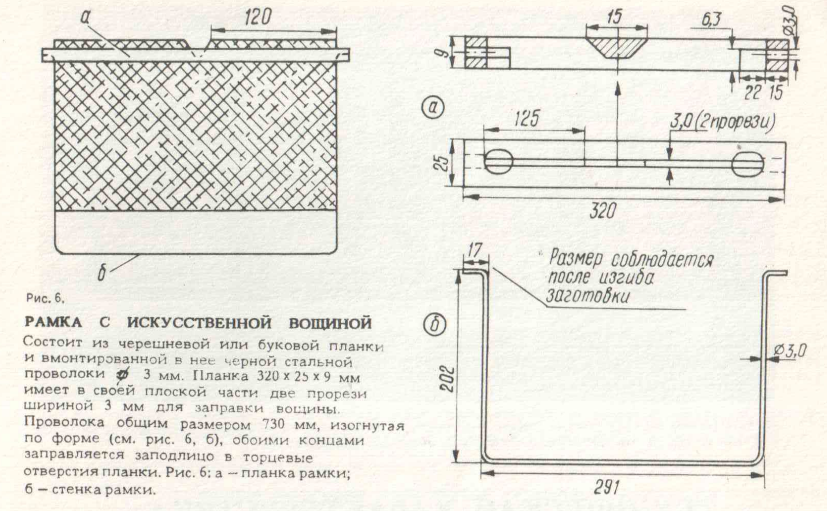
- The "Semi-Frame" (Le Semi-Cadre): Delon replaced traditional 4-sided wooden frames with a top bar (320 × 25 × 9 mm) combined with a single U-shaped 3 mm bent steel wire, opening lateral bee passes along the hive walls.
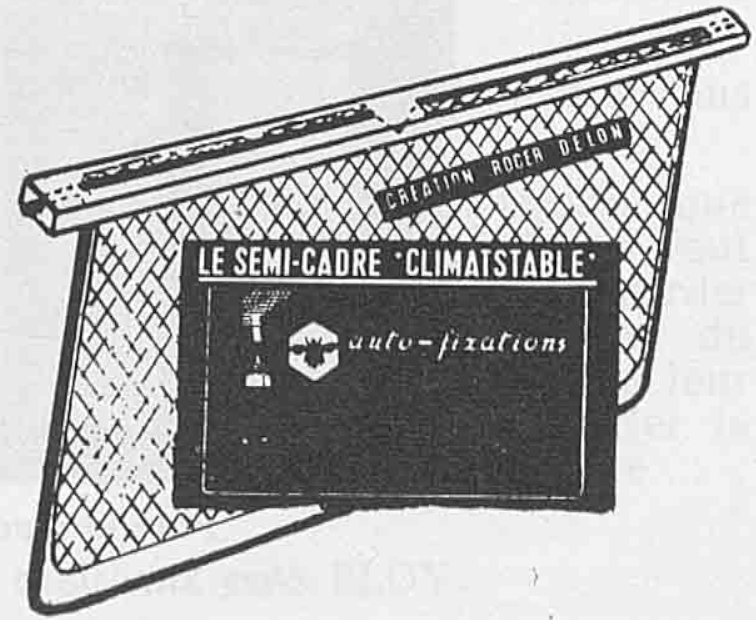
Figure 2: Roger Delon's Climatstable frame deign. He called it Semi-Cadre (Semi-Frame). La Gazette Apicole (April 1979)
The Transmission to Ukraine & The "Alpine" Identity
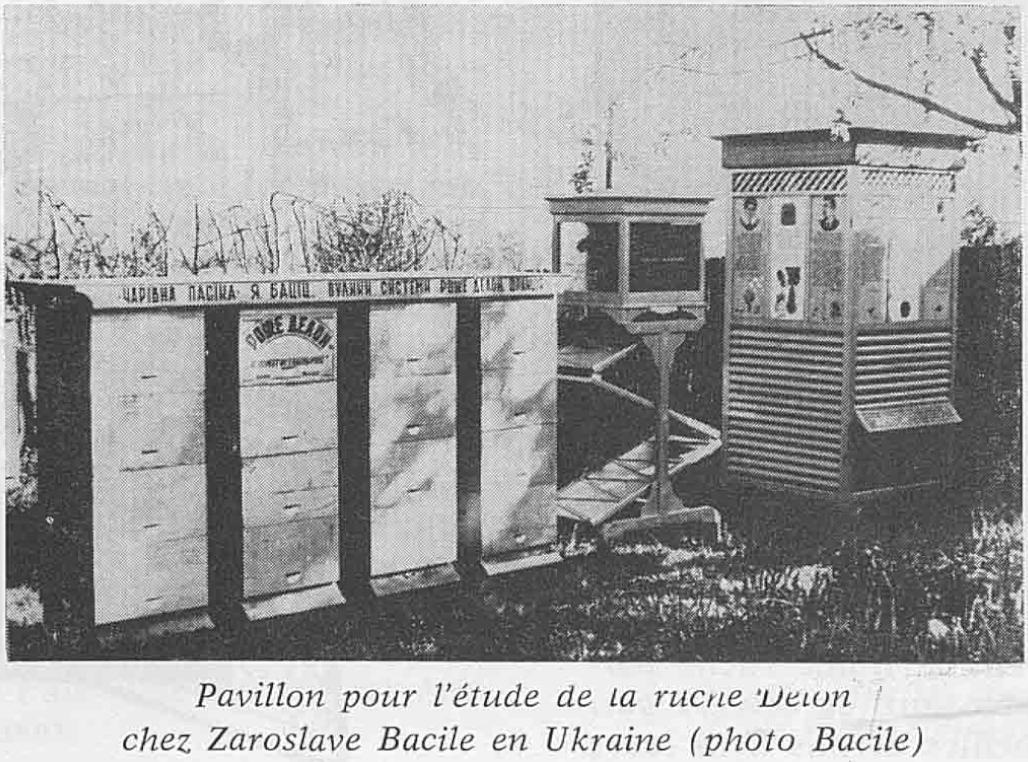
The Ukrainian Connection (1970s): Following Apimondia '71, beekeeper Yaroslav Bacic from Rozheve (Lviv region) established contact with Delon. By 1979, photos published in La Gazette Apicole showed operational Delon hives in Western Ukraine under the sign: "ЧАРІВНА ПАСІКА - Я. БАЦИЦ - ВУЛИКИ СИСТЕМИ РОЖЕ ДЕЛОНА" ("MAGIC APIARY - Y. BACIC - HIVES OF ROGER DELON SYSTEM").
A Soviet-era instructional booklet published in Mironovka by cooperatives Triada and Zolotoy Yarlyk introduced the title "Альпийский Улей" (Alpine Hive), likely choosing the name because Delon kept bees in France and Switzerland. From this point, Delon's design became widely known as the Alpine Hive across former USSR territories.
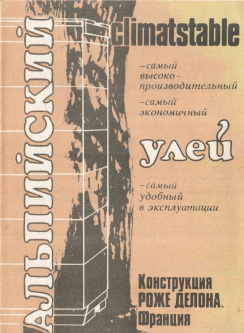
Original Booklet Specifications (215 mm Box)
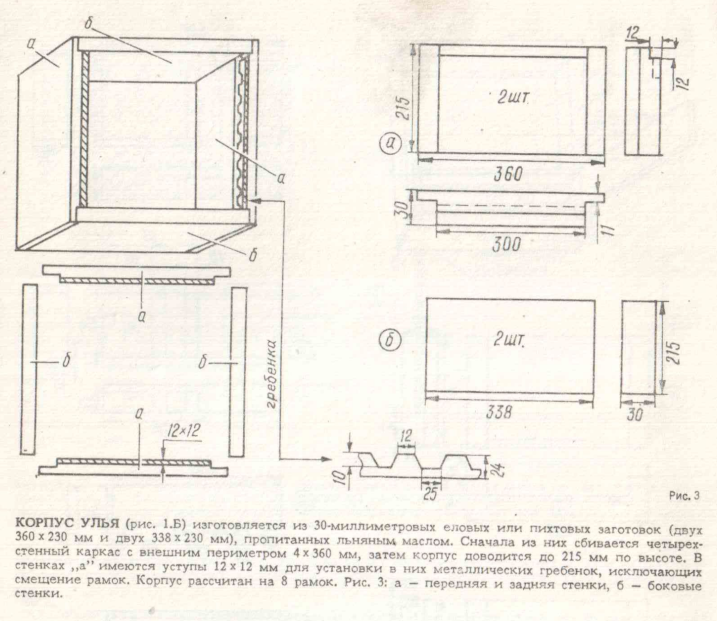
Contrary to popular belief, the original blueprint specified:
- Box Dimensions: 300 × 300 mm internal cross-section, 215 mm height, 30 mm thick wood.
- Frame Dimensions: 320 mm top bar, 291 mm wire width, 202 mm wire height.
- Box Weight: A full 215 mm box with honey weighed approximately 16 kg (~11 kg honey).
The Subsequent 108 mm Revolution
The shift to the 108 mm box occurred in later Soviet adaptations (e.g., Pchelovodstvo journal, 1992). Translators conflated Delon's term "semi-cadre" with the Soviet полурамка (half-height frame). Beekeepers halved Delon's 215 mm box height to 108 mm, creating an ultra-shallow box weighing only 8–10 kg full for easy handling.
Critical Takeaway for Hive Builders
If constructing a true 300×300 mm internal box (whether 215 mm depth or the 108 mm variant), frame specifications must be recalculated to respect proper bee space (6–9 mm):
- Frame Width: Should be scaled to 284–286 mm to maintain a proper 7–8 mm side gaps.
- Frame Height (108 mm Box): Should be set at 98–100 mm to ensure a stable 8–10 mm vertical clearance between stacked box frames.
Please contact me at 'volodymyr.tolpiekin at gmail dot com' if you have any information from early Roger Delon's works or if you have access to L'Apiculture Productive Économique et Simplifiée (Probably from 1946) or Materials from the Moscow congress